The Five Boys Who Changed My Life
Before I Had a Credential, I Had a Calling
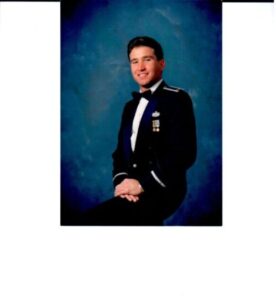
Before I was Dr. Clay, I was Captain Lessor-USAF. No PhD. No license. No program. No book. A guy in his twenties proudly serving his country who knew what it felt like to grow up without a father who showed up—and who couldn’t stop noticing the boys around him who were carrying the same weight. In the early 1990s, I signed up to be a Big Brother.
Not once. Five times.
The first boy—I’ll call him David—was eleven. Quiet. The kind of quiet that adults mistake for well-behaved but that clinicians recognize as guarded. His mother worked two jobs. His father had been gone since he was three. When I picked him up for our first outing, he sat in the passenger seat and stared straight ahead for twenty minutes without saying a word. I didn’t try to fill the silence. I’d learned that much from my own childhood—that sometimes the most important thing a man can do for a boy is just be there without demanding anything in return. We went to a park. We threw a football. He was terrible at it. I was terrible at it. We laughed. And on the drive home, he said, “Same time next week?” That was the moment. Not the football. Not the park. The question. Same time next week. He was asking: are you coming back? Are you the kind of man who stays?
I said yes. And I meant it.
Over the next several years, there were five boys in all. Each one different. Each one carrying something he couldn’t name. One was angry—the kind of anger that made his teachers afraid of him but that I recognized immediately as grief in disguise. One was a class clown who used humor to make sure nobody ever got close enough to see how sad he was. One barely spoke. One spoke constantly, filling every silence because silence in his house meant something bad was about to happen. One was so desperate for male approval that he’d agree with anything I said, mirroring my opinions, my interests, my moods—because he’d learned that the safest way to keep a man’s attention was to become whatever that man wanted. I didn’t have the clinical vocabulary for what I was seeing. I didn’t know the words “attachment injury” or “object relations” or “father wound.” I just knew these boys needed something I understood from the inside: a man who kept showing up.
What They Taught Me
I went into Big Brothers thinking I was going to help these boys. And I did—consistency matters, and I gave them that. But what I didn’t expect was how much they would teach me. David taught me that trust is built in tiny increments. Not through grand gestures but through showing up, again and again, until the boy’s nervous system finally believes you’re not going to disappear. It took David four months to relax around me. Four months of showing up before his body believed what his mind couldn’t: this man is staying. The angry one taught me that behavior is a language. When a boy can’t say “I’m in pain,” he says it with his fists, his defiance, his refusal to cooperate. I learned to stop reacting to the behavior and start listening to it. What is this anger trying to tell me? The mirroring one taught me the most painful lesson of all: that a boy will abandon his own identity to keep a man’s attention. He’d agree with everything I said. He liked what I liked. He wanted what I wanted. And one day I realized—with a chill—that I had no idea who this kid actually was. He’d been so busy performing for me that neither of us had met the real him. That’s the Enmeshed Wound, though I wouldn’t name it that for another decade.
The Turn
Those five boys are the reason I went back to school. They’re the reason I got my bachelor’s, my master’s, and eventually my doctorate. Not because I wanted more letters after my name, but because I kept sitting across from boys I couldn’t help enough with just my presence. I needed tools. I needed theory. I needed a framework. The Quest Project®—the ten-week program that has now served over two thousand boys—exists because five kids in the 1990s showed me what was needed and I didn’t yet know how to give it to them. I think about them often. I wonder where they are. I wonder if David still throws a terrible football. I wonder if the angry one found someone who finally asked him why. I wonder if the mirroring one ever figured out who he actually was. I don’t know the answers. But I know this: they changed my life more than I changed theirs. And every boy who’s walked into my office since then has benefited from what those five taught me before I had a single credential to my name.
Sometimes showing up is the credential.
If your son is carrying a wound he can’t name, take the free Father Wound Assessment at claytonlessor.com/assessment. Forty indicators across five wound patterns. Five minutes. It may be the starting point for a conversation that changes everything.
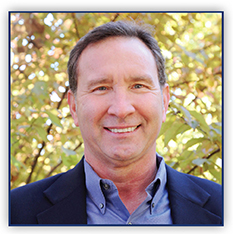
Clayton J. Lessor, PhD, LPC, is the author of the upcoming book The Father Wound: Healing the Hidden Injury Behind Your Son’s Struggle and the creator of The Quest Project®, a therapeutic outpatient program that has served over 2,000 adolescent boys since 2000. He served on the steering committee for the White House Council on Men and Boys (2019–2022) and lives in St. Louis, Missouri.
Next post: A Letter to the Father Who Knows He’s Failing
Latest posts by Clayton Lessor (see all)
- The Five Boys Who Changed My Life - March 24, 2026
- The Wound Nobody Talks About - March 17, 2026
- Why Your Son’s Anger Isn’t the Problem - March 10, 2026